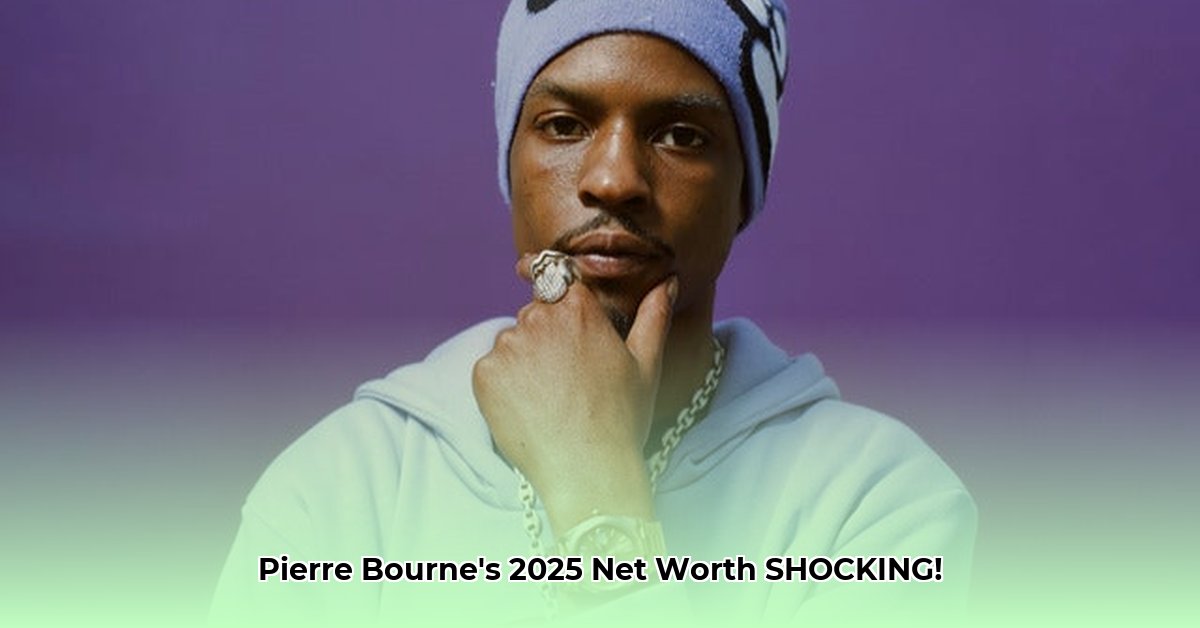
Pierre Bourne's Net Worth: Untangling the Complexities
Determining Pierre Bourne's precise net worth presents a significant challenge. Online sources offer wildly varying figures, ranging from a modest $100,000 to a substantial $7 million. This disparity stems from the inherent opacity of the music industry's financial landscape. Unlike publicly traded companies, music producers' income streams are multifaceted and often kept confidential.
The Producer's Puzzle: Why Transparency is Elusive
Unlike corporate entities with readily available balance sheets, assessing a music producer's financial status is complex. Income sources include streaming royalties, publishing deals, production fees, and artist collaborations – each with varying payment structures and reporting timelines. This lack of transparency contributes to the wide range of net worth estimates circulating online. The inherent privacy surrounding these financial arrangements makes precise calculation nearly impossible.
From Viral Sensation to Grammy Recognition: A Meteoric Rise
Pierre Bourne’s career trajectory, however, is far clearer than his financial picture. His distinctive producer tag catapulted him into the spotlight, leading to high-profile collaborations with artists like Playboi Carti, 6ix9ine, and Kanye West. His Grammy nomination further underscores his significant achievements and widespread influence. This remarkable ascent strongly suggests substantial financial success, though the precise extent remains elusive.
The Missing Pieces: Data Limitations
The primary obstacle in pinpointing Bourne's net worth is the lack of access to his private financial records. Without details on investments, publishing deals, and royalty payments, any estimate remains speculative. This lack of transparency, while frustrating, is a common reality in the music industry, where artists rarely divulge their personal financial information.
Forecasting Future Earnings: Potential and Risks
Predicting Pierre Bourne's future financial prospects requires considering several key factors. Continued collaborations with top-tier artists will significantly impact his earnings. The success of his solo projects and any strategic diversification into areas like merchandise or NFTs will also play a crucial role. However, inherent risks exist. Changes in streaming revenue models, evolving musical tastes, and potential legal disputes over royalties all pose challenges.
How to Accurately Estimate a Music Producer's Net Worth
Accurately estimating Pierre Bourne's net worth, or indeed any music producer's, is incredibly difficult without access to private financial information. The massive discrepancies between online estimations – ranging from $1 million to $10 million – highlight the inherent limitations. Multiple income streams, complex financial agreements, and the industry’s culture of discretion combine to create a significant hurdle for precise calculation.
Decoding the Discrepancies: Unpacking the Challenges
The primary challenge lies in comprehensively tracking all revenue streams. Bourne's income likely involves production fees, songwriting royalties, performance fees (if applicable), and endorsement deals – each with its own unique payment structure and reporting frequency. Furthermore, the complexities of collaborative ventures further complicate the calculation; these often involve upfront payments, royalty points, and other less-transparent financial incentives.
Analyzing Bourne's Financial Landscape: An Imperfect Picture
Without access to personal financial data, including tax documents and comprehensive contract information, any net worth figure remains an educated guess. This underscores the inherent challenges of assessing the financial success of individuals within this opaque industry.
The Path Forward: Refining Estimation Methods
A more accurate approach would involve meticulously identifying all known income streams. Quantifying their value would require leveraging industry averages and publicly available information, which is unfortunately limited in Bourne's case. While we can consider the potential for future earnings based on prior success, significant uncertainties persist. The inherent limitations underscore the impossibility of achieving a definitive figure without access to private financial information.
Key Takeaways:
- Precisely estimating Pierre Bourne’s net worth is currently impossible due to the lack of publicly available and verifiable financial data.
- Multiple income streams and the complexities of the music industry's financial arrangements make accurate calculation extremely difficult.
- Any estimate presented would necessarily remain a broad range reflecting the large uncertainties inherent in the situation.
Beyond the Stage: The Diverse Income Streams of Modern Musicians
For many, the romanticized image of a musician earning a living conjures up packed stadiums or intimate coffeehouse gigs, and indeed, live performances remain a cornerstone of income for artists at every level. Touring not only brings in essential ticket sales but also creates vital opportunities for merchandise revenue, from branded apparel to physical albums, solidifying a direct connection with their most dedicated fans. Beyond the spotlight, many skilled musicians also find steady work as session players, lending their talents to recordings for other artists, or impart their knowledge through private lessons and workshops, cultivating the next generation of talent while diversifying their own financial portfolio.
However, the digital age has dramatically expanded the avenues for a musician’s income, moving far beyond the physical stage. While individual streaming royalties may seem modest, cumulative plays across platforms like Spotify and Apple Music contribute to an ongoing revenue stream, especially for artists with a large and growing audience. Licensing music for film, television, advertisements, or video games — known as sync licensing — offers potentially lucrative one-time payments and wider exposure. Furthermore, platforms like Patreon empower fans to directly support artists through subscriptions, while online content creation, such as YouTube tutorials or virtual concerts, opens up new global audiences and monetisation opportunities, proving that modern musicians are truly master entrepreneurs crafting a symphony of income streams.